
Sorting
Three grades, judged by hand
There is no machine that reads figure. Every piece is graded straight off the saw, looked at, argued over when it sits on a line, and photographed before it is offered.
Grading figured wood is a judgement, and anyone who dresses it up as a specification is selling certainty they do not have. What we can do is state what each grade means, apply it the same way every time, and show you the piece first.
What the three grades mean
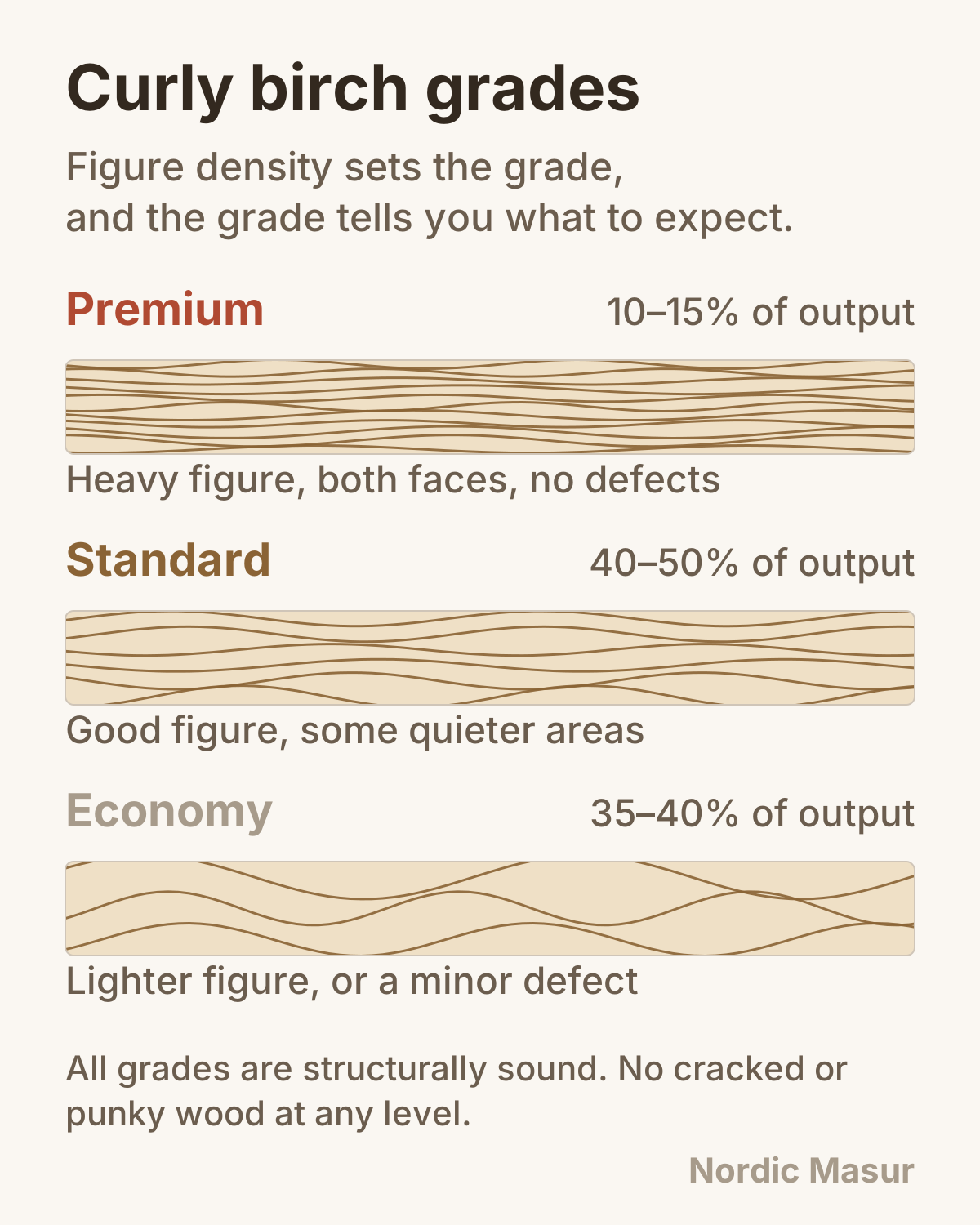
Premium
Dense figure across the whole face, both faces on a scale pair, no sound knots in the working area, no checks, no bark inclusion breaking the surface. Roughly 10–15% of what we cut.
Standard
Good figure over most of the face, with a quieter zone somewhere, or a small sound feature that a maker can plan around. This is the working grade for most knives and most turning, and 40–50% of output.
Economy
Figure present but patchy, or the piece carries a defect that limits where it can be used: a check at one end, a soft dark area, an off tone. Everything that is not Premium or Standard, sound and honestly described.
Grade is about figure and defects, not drying. An Economy board is dried the same way, to the same moisture, as a Premium one.
Which grade for which job
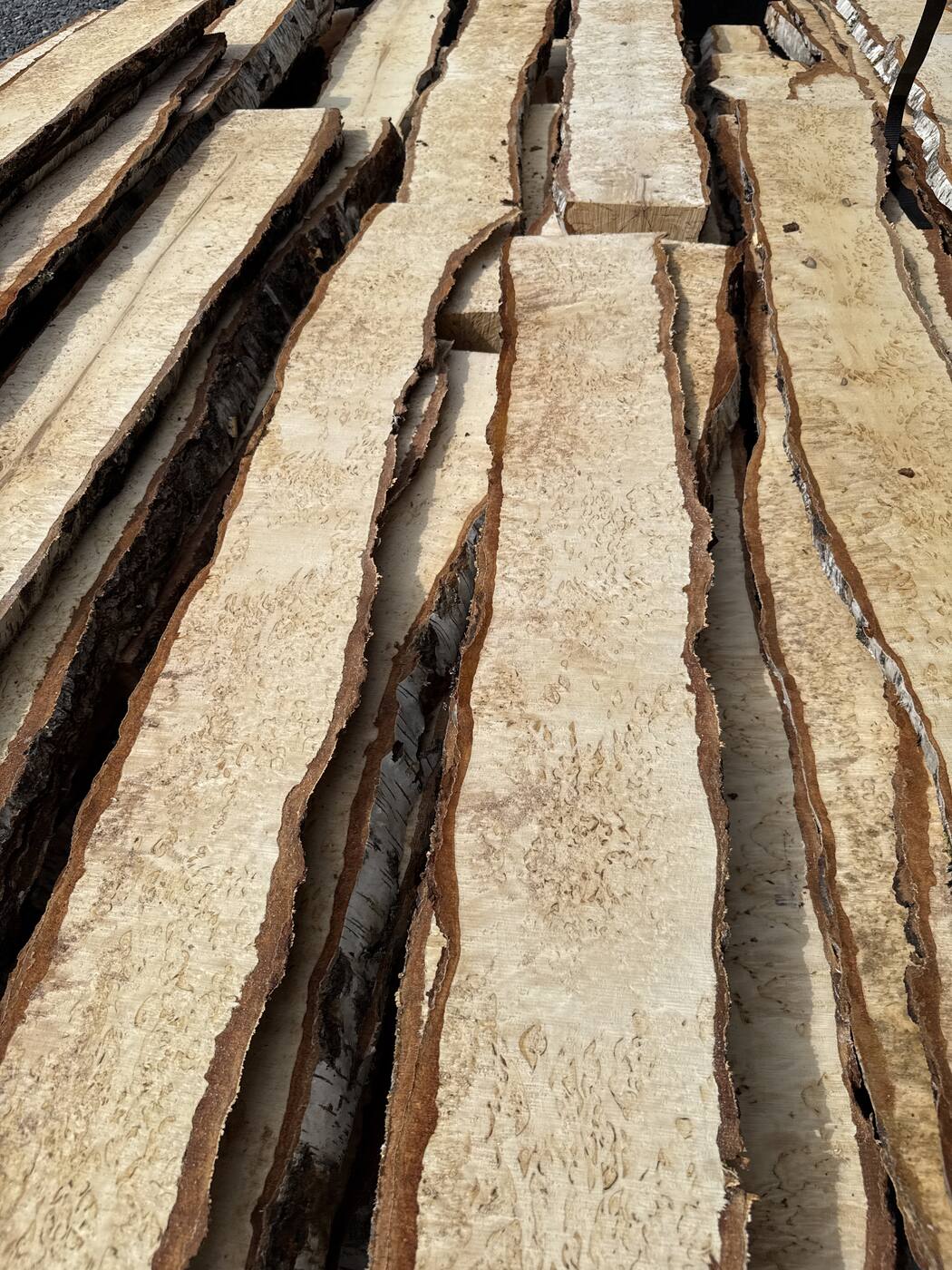
A wide feature tabletop or a single-slab bench wants Premium or good Standard, because the whole face will be seen and handled. A slab that will be resawn into narrower boards, or used as a panel with the edges trimmed away, can take Standard comfortably: the best part of the figure gets kept regardless of grade.
Economy is the right choice more often than people expect. Practice cuts, backing boards, anything getting painted or a dark stain, or a panel where only the centre third will show. If you tell us how much of the board will actually be visible, we will point you down a grade rather than up.
How the sorting actually works
Straight off the saw
The sawn face already shows the figure and the defects. We do not plane before grading — there is nothing a plane would tell us that the saw has not.
Judged by eye
One person grades. Most pieces are obvious within a few seconds — the figure is either there across the face or it is not.
Two people on the borderline
Anything sitting on a line between grades gets a second pair of eyes. If the two of us disagree, the piece takes the lower grade. That rule costs us money and it is the only version worth having.
Photographed three ways
Both faces flat, plus one angled shot under raking light. A flat photograph flattens the figure, which is exactly the information you are buying. The photographs are of the pieces you would receive, not of a similar batch.
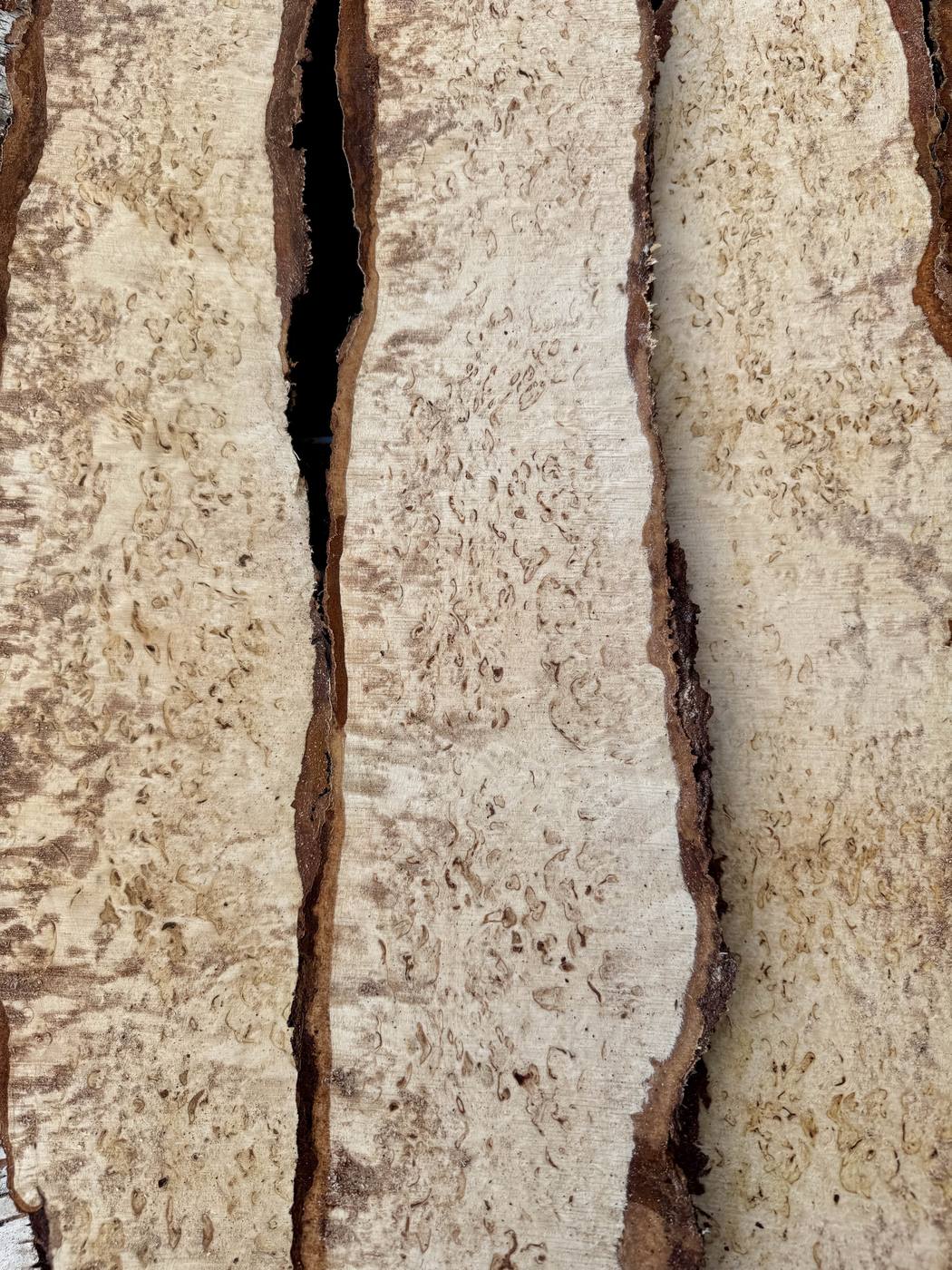
When two of us disagree about a piece, it goes in the lower grade. That is the whole policy.
What we will tell you before you order
The defects, in words, on the piece you are being offered. A 40 mm check at one end, a knot 12 mm from the edge, a pale streak through the middle third. We would rather lose the order than have a maker open a parcel and find something nobody mentioned.
What each form is available in is on the products page. Why the figure varies so much within a single tree is on the curly birch page.
Not sure which grade you need
Describe the piece you are making and where the wood will show. We will recommend a grade, and it will not always be the expensive one.
Prefer email? Write to hello@nordicmasur.com.